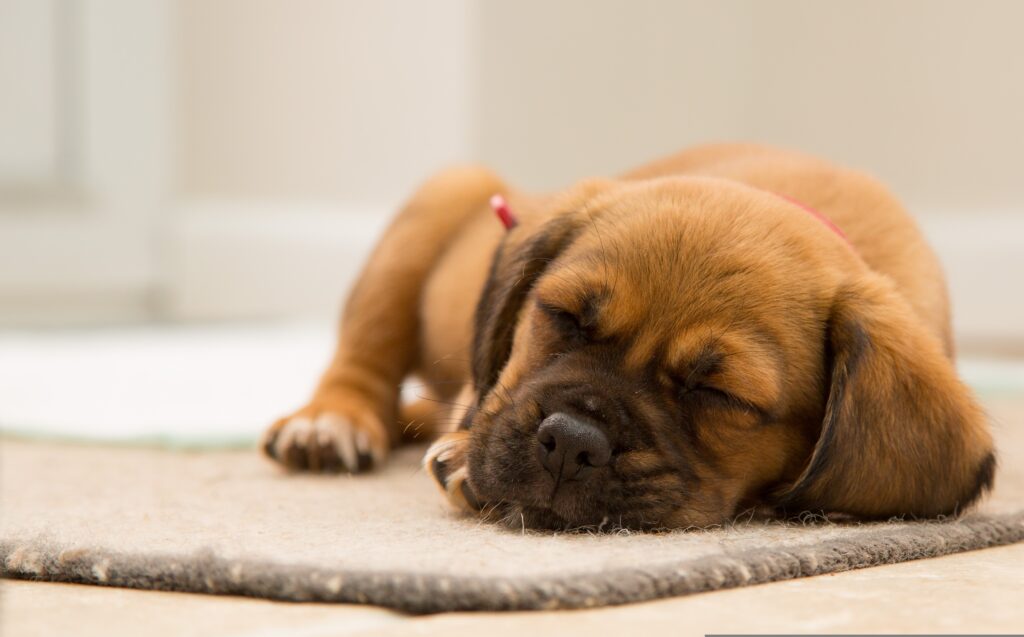
Do you ever look at your dog curled up on the rug and wonder, is it normal for them to sleep this much? From tiny puppies to senior hounds, dogs spend a significant portion of their lives in dreamland. While it might look like laziness, there are actually fascinating biological and evolutionary reasons for those long naps. In this guide, we explore the science of canine sleep and help you understand exactly how much rest your dog really needs.
If it feels like your dog spends more time dreaming than playing, you aren’t imagining it. While the average human needs about 7–9 hours of sleep, our canine companions can easily clock in 12 to 14 hours a day. But why do they need so much shut-eye? Let’s look at the science of why your pup is a professional napper.
Evolution and “The Predator’s Luxury”
In the wild, dogs are predators. Unlike prey animals (like horses or rabbits) that must stay awake to watch for danger, predators can afford to sleep deeply between hunts. Your dog’s ancestors would expend massive amounts of energy in short bursts to catch food and then sleep for long periods to recover. Your pampered pup still has that “all-or-nothing” energy settings.
They Are “Flexible” Sleepers
Humans have a circadian rhythm—we sleep in one big chunk at night. Dogs, however, are flexible sleepers. They can fall asleep instantly when they are bored and wake up the second they hear the mail carrier or a bag of treats opening. Because their sleep is often interrupted, they need more of it throughout the day to feel rested.
Different Sleep Cycles (REM vs. Non-REM)
While humans spend about 25% of their sleep in REM (Rapid Eye Movement)—the deep, restorative sleep where dreaming happens—dogs only spend about 10% of their sleep in this stage. Because they are “light sleepers” and reach REM less frequently, they need more total hours of sleep to get the same restorative benefits we do.
Age and Size Matter
- Puppies: Just like human babies, puppies are growing at an incredible rate. They can sleep up to 18–20 hours a day to support their brain and body development.
- Seniors: As dogs age, they tire out more easily and require more frequent rest.
- Large Breeds: Surprisingly, bigger dogs (like Mastiffs or Great Danes) usually sleep more than smaller breeds. They are often called “mat-dogs” because they spend so much time lounging!
Boredom
Sometimes, a dog sleeps simply because there is nothing better to do. If you notice your dog sleeping more than usual, it might be a sign they need more mental stimulation or physical exercise during their “up” time.
You may also like: [Why Do Dogs Follow You Everywhere? 5 Reasons for Your “Velcro Dog”]
[Why Do Dogs Sniff Everything? The Science of the “Sniffari”]
Leave a Reply