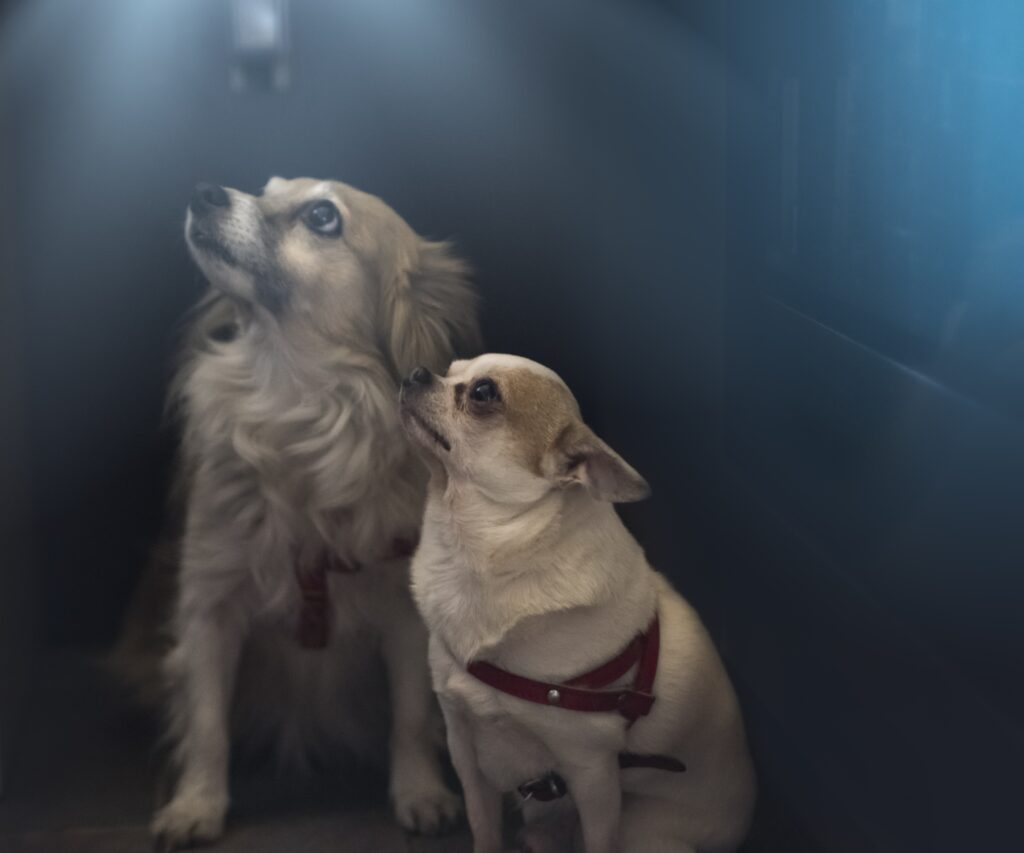
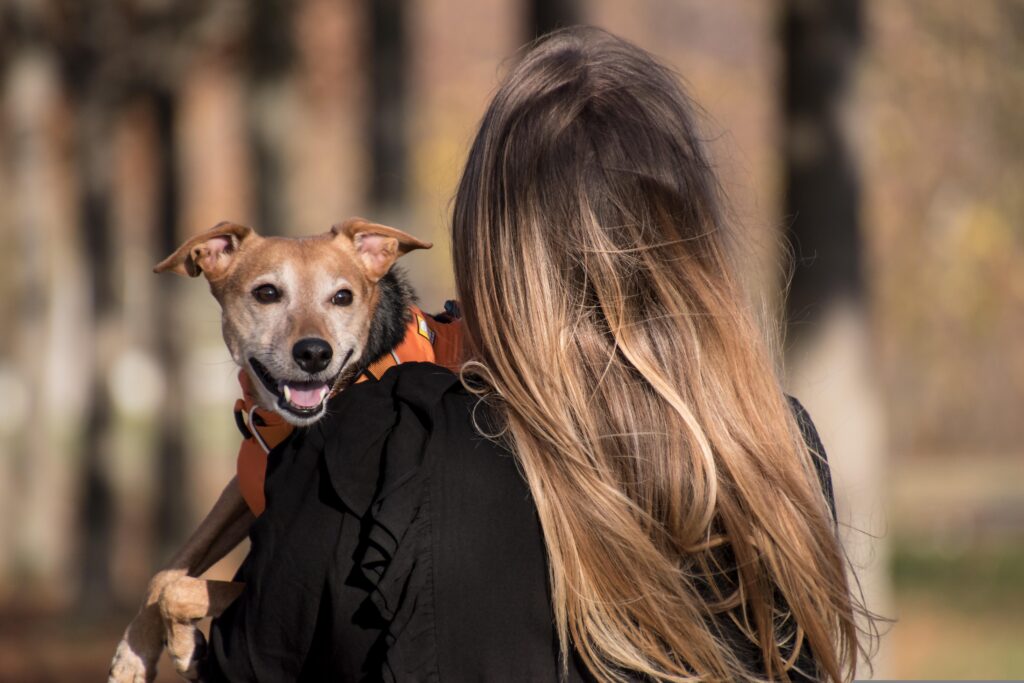
As the skies darken and the first rumble of thunder echoes, many dog owners watch their calm pets turn into shaking, anxious shadows of themselves. If you are asking, “why is my dog afraid of thunder?“, you are witnessing a very common and deeply instinctual canine response. The combination of flashing lights, loud dropping noises, and even changes in barometric pressure can easily overload a dog’s sharp senses. In this guide, we will explore the science behind this storm phobia and provide practical ways to help your pup feel secure.
Why Storms Scare Dogs So Much
Barometric Pressure Changes: Dogs can feel the drop in atmospheric pressure long before the storm actually arrives, which can trigger an unexplainable sense of doom.
Static Electricity: Large dogs, in particular, can experience uncomfortable static electricity build-up in their fur during a storm, causing them to seek out grounded areas like bathtubs.
Superior Hearing: The booming sound of thunder is vastly louder and more threatening to a dog’s sensitive ears than it is to ours.
Have you ever been standing in the kitchen or sitting on the couch, only for your dog to come over and press their entire body weight against your legs? If you’ve wondered, “why does my dog lean on me?“, you are experiencing one of the most unique and endearing behavioral traits in the canine world. Unlike humans, who value personal space, dogs are pack animals that use physical contact to communicate complex emotions. From seeking a sense of security to showing pure affection, your dog’s lean carries a deep psychological meaning. In this article, we’ll break down why your pup craves this physical closeness.
The Main Reasons Behind the Lean
Affection and Trust (The “Canine Hug”):
Since dogs don’t have arms to hug you, pressing their body against yours is their way of showing love. It triggers the release of oxytocin (the bonding hormone) in both you and your pet.
Seeking Security and Comfort:
If your dog is naturally anxious or gets startled by loud noises, leaning against you acts like a security blanket. They are using your calm energy to ground themselves and feel safe.
Herding and Proximity (Breed Instincts):
Certain herding or working breeds naturally like to know exactly where their human is at all times. Leaning ensures you can’t move away without them noticing!
Dominance vs. Submission Myth:
Older training philosophies claimed leaning was a sign of a dog trying to dominate you. Modern animal behaviorists have debunked this—it is almost always driven by a desire for closeness, not power.
Panting is a normal part of being a dog, but as an owner, it’s natural to feel concerned when it seems excessive. Since dogs don’t sweat like humans do, they rely on panting as their primary way to cool down. However, if you are asking, “why is my dog panting so much?” and the environment isn’t particularly hot, it could be a sign of something more than just a warm day. Understanding the difference between normal cooling and abnormal distress is vital for your pet’s well-being. In this guide, we’ll explore the common reasons for heavy panting and the red flags you should never ignore.
Common Reasons for Panting
Cooling Down (The Most Common Cause):
Dogs pant to evaporate moisture from their tongues and lungs, which helps regulate their body temperature after exercise or in warm weather.
Anxiety and Stress:
Emotional distress—like thunder, fireworks, or a vet visit—often triggers heavy panting as part of the “fight or flight” response.
Pain or Discomfort:
Dogs are experts at hiding pain. Sometimes, the only outward sign that a dog is hurting (from an injury or an upset stomach) is unexplained, heavy panting.
Excitement:
Happy panting often happens when you come home or when it’s time for a walk. This is usually accompanied by a wagging tail and a relaxed posture.
When It Is an Emergency
Panting can sometimes indicate a serious medical issue. Seek veterinary care immediately if you notice:
Heatstroke: Extreme panting, dark red gums, and lethargy after being in the sun or a hot car.
Difficulty Breathing: If your dog seems to be struggling for air or if their tongue/gums look blue or purple.
Poisoning: Heavy panting combined with vomiting or tremors.
Heart Issues: Consistent heavy breathing even when the dog has been resting in a cool environment.
Barking is one of the most common ways dogs communicate with the world around them, but when the noise becomes constant, it can be overwhelming for any owner. If you find yourself asking, “why is my dog barking so much?“, it is important to remember that your dog isn’t just making noise—they are trying to tell you something. Whether it’s driven by a need for attention, a reaction to the environment, or an underlying emotional state, understanding the “why” is the first step toward a more peaceful home. In this guide, we will explore the common triggers for excessive barking and how you can better understand your dog’s unique voice.
Common Reasons for Excessive Barking
Territorial or Protective Behavior:
Dogs often bark at people or other animals approaching what they perceive as their “territory,” such as your home or yard.
Alarm and Fear:
Sudden noises or unexpected movements can startle a dog, leading to barking as a defensive reaction.
Boredom and Frustration:
Dogs are social and active animals; if they lack mental stimulation or physical exercise, they may bark to release pent-up energy.
Attention-Seeking:
Many dogs learn that barking is the fastest way to get their owner to look at them, play, or provide a treat.
Separation Anxiety:
This type of barking often happens when the dog is left alone and is usually accompanied by other signs of distress, like pacing or chewing.
Practical Tips to Manage the Barking
Identify the Triggers: Pay close attention to what happens right before your dog starts barking to find the specific cause.
Increase Mental Stimulation: Use puzzle toys or short training sessions to keep their minds engaged—a busy brain is a quiet brain.
Physical Exercise: Ensure your dog is getting enough daily activity; a tired dog is generally much less likely to bark at every passing shadow.
Avoid Yelling: Shouting at your dog to “be quiet” can be misinterpreted as you “barking” along with them, which may actually encourage the behavior.
When to Seek Professional Help
If your dog’s barking is driven by intense aggression or severe anxiety, it may be time to consult a professional behavioral trainer. They can help you create a tailored plan to address your dog’s specific needs and improve their quality of life.
Do you ever feel like your daily walk is more of a “stop-and-sniff” session than a workout? If you’ve ever wondered, why do dogs sniff everything?, you’re about to discover a hidden world of communication. For dogs, a single sniff provides a wealth of information that we can barely imagine. In this guide, we’ll explore the incredible science behind your dog’s nose, from the “social media” of fire hydrants to how sniffing can actually help calm your pup’s anxiety.
If you’ve ever taken your dog for a walk, you know the feeling: you’re ready for a brisk exercise, but your dog wants to stop and investigate every single blade of grass and fire hydrant. While it might seem like they are just being stubborn, your dog is actually “reading” the world. For a canine, sniffing is more than just a sense—it’s how they process information.
A Super-Powered Sense of Smell
To understand why they sniff so much, you have to look at the hardware. Humans have about 5 million olfactory receptors in our noses. Dogs? They have up to 300 million. Additionally, the part of a dog’s brain that analyzes smells is, proportionally, 40 times larger than ours. When they sniff, they aren’t just smelling “grass”; they are smelling who was there, what they ate, and even how they were feeling.
The Jacobson’s Organ (Vomeronasal Organ)
Dogs have a special “second” smelling system located in the roof of their mouth called the Jacobson’s organ. This organ is specifically designed to detect pheromones—chemical signals that animals leave behind. This allows your dog to “taste-smell” chemical messages that tell them if another dog is a friend or foe, or if a female is in heat.
Reading the “Pee-mail”
In the US, trainers often joke that hydrants and light poles are the “social media” of the dog world. When your dog sniffs where another dog has urinated, they are checking their “inbox.” They can tell the age, gender, health status, and even the stress levels of the dog that was there before them.
Mental Stimulation and Relaxation
Sniffing is hard work for a dog’s brain. In fact, 15 minutes of sniffing is often more tiring than an hour of walking. Engaging their nose lowers their heart rate and reduces stress. This is why many behaviorists in the US now recommend “Sniffaris”—walks where the dog is allowed to lead with their nose and stop as often as they like.
Identifying Their “Pack”
When you come home and your dog sniffs your shoes or legs intensely, they are performing a “security check.” They are learning where you went, who you were with (did you pet another dog?), and even if you stopped at a burger joint on the way home.
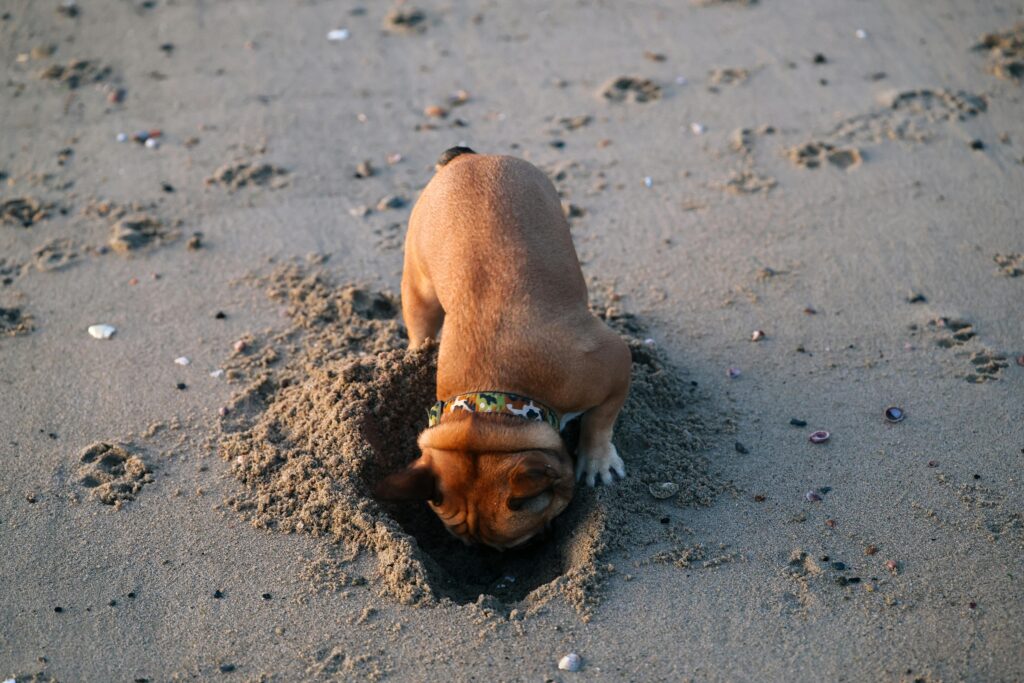
Do you have a backyard full of “landmines” and a pup with perpetually muddy paws? If you’ve ever looked at your ruined flower bed and asked, why do dogs dig?, you’re not alone. Digging is a deeply ingrained instinct, but it’s often triggered by specific needs like cooling down, boredom, or even hunting underground pests. In this guide, we’ll dig into the psychology behind this behavior and provide practical tips to help you protect your lawn while keeping your dog happy.
If your once-beautiful backyard now looks like a construction zone, you aren’t alone. Digging is a natural canine behavior, but that doesn’t make it any less frustrating when it’s your prize-winning roses on the line. To stop the digging, you first have to understand the motivation behind the paws.
Ancestral Instincts (Denning)
Before they had cozy orthopedic beds in our living rooms, dogs lived in dens. Digging a shallow hole provides a sense of security and protection from predators. Even today, some dogs—especially pregnant females or those feeling a bit anxious—dig to create a “safe space” or a nest for themselves.
Temperature Control
If it’s a hot summer day in the US, your dog might be digging to find relief. The earth a few inches below the surface is significantly cooler than the grass or the air. If you see your dog digging a hole and immediately lying down in it, they are likely just trying to regulate their body temperature.
Boredom and Excess Energy
Dogs need a “job.” If they are left alone in a yard for hours without toys, puzzles, or human interaction, they will find their own entertainment. Digging is a physically demanding and mentally stimulating activity that helps bored dogs pass the time and burn off steam.
Hunting for Underground “Critters”
Terriers and Hounds were specifically bred to hunt animals that live in burrows. If your dog is digging intensely in one specific spot, or following a line across the yard, they probably hear or smell a mole, gopher, or squirrel beneath the surface. In their mind, they aren’t “destroying the yard”—they’re working!
The “Great Escape”
Some dogs dig along the fence line because they want to see what’s on the other side. Whether they are looking for a mate, a neighborhood friend, or are simply suffering from separation anxiety, “escape digging” is a sign that your dog wants more social interaction or a change of scenery.
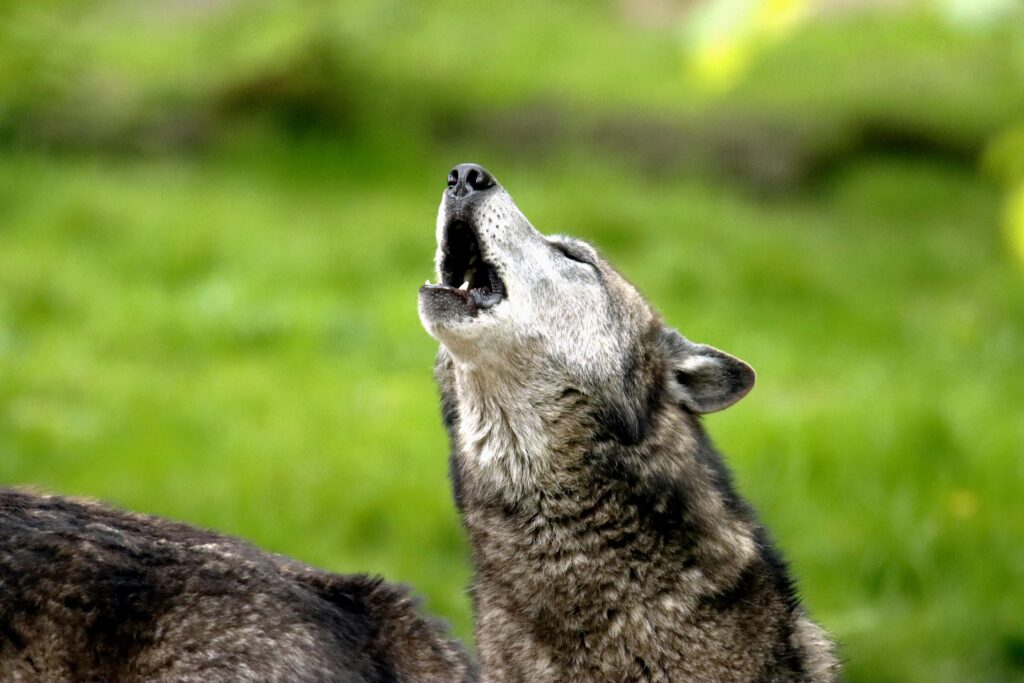
There is something undeniably haunting and beautiful about a dog’s howl. While it might seem like your pup is just being noisy, howling is actually an ancient form of communication inherited from their wolf ancestors. From responding to sirens to signaling their “pack,” there are several reasons why your dog chooses to howl. In this guide, we’ll explore the psychology behind the howl and help you understand what your dog is trying to say to the world.
Whether it’s a response to a passing siren or a “concert” when you leave the house, a dog’s howl is one of the most soul-piercing sounds in nature. While it might be startling (or a bit loud for the neighbors), howling is a natural, deeply-rooted form of communication. Here is why your dog might be channeling their inner wolf.
Ancestral “GPS” and Communication
In the wild, wolves howl to help pack members find their way back home. It serves as a long-distance vocal beacon. When your dog howls, they may be trying to “call the pack” together—which, in a modern home, usually means calling you back to their side.
Responding to High-Pitched Sounds
Have you ever noticed your dog starts howling as soon as an ambulance or police siren passes by? They aren’t necessarily “singing along.” To a dog, a siren can sound like a distant howl from another dog. They are simply responding to the “message” they think they are hearing.
Claiming Their Territory
Just as dogs use scent to mark their territory, they also use sound. Howling is a way of announcing to other dogs in the neighborhood, “This is my house, and I’m here!” It acts as a verbal boundary to keep intruders away.
Expressing Loneliness or Separation Anxiety
For some dogs, howling is a way to express emotional distress. If your neighbors report that your dog howls only when you are gone, it could be a sign of Separation Anxiety. In this case, the howl is a cry for companionship and a way to deal with the stress of being alone.
They Found Something Exciting!
Hunting breeds, like Beagles or Hounds, were bred to “bay” or howl when they cornered prey or found a scent. Your dog might howl simply because they’ve spotted a squirrel in the backyard and want to tell you all about their “big find.”
It’s the universal sign of a happy dog, right? Not necessarily. While a wagging tail is often a greeting, it’s actually a sophisticated form of communication that carries many different meanings. From the speed of the flick to the direction of the swing, your dog’s tail is telling a story. In this guide, we’ll decode the secrets of tail wagging so you can better understand exactly what your furry friend is trying to tell you.
We’ve all seen it: that frantic, thumping wag when you come home from work. While we usually interpret a wagging tail as a smile, it’s actually more like a social signal or a communication tool. Depending on the speed, height, and even the direction of the wag, your dog could be saying anything from “I’m thrilled” to “I’m feeling a bit nervous.”
The Tail as a “Mood Meter”
Think of the tail as a mirror of your dog’s emotions. To understand what they are saying, you have to look at the height of the tail:
High and Stiff: This usually indicates a dog is alert, agitated, or showing dominance.
Middle Height: Generally shows a relaxed, content dog.
Tucked or Low: This is a classic sign of fear, submission, or anxiety.
Direction Matters: The Left vs. Right Theory
Fascinating research has shown that the direction of a wag can reveal a dog’s feelings:
Wagging to the Right: Usually indicates positive emotions (like seeing their owner). This is linked to the left side of the brain, which governs approach behavior.
Wagging to the Left: Often indicates negative or “avoidance” emotions (like seeing a dominant dog they don’t know).
The “Circle Wag” (The Helicopter)
If your dog’s tail is moving in a full circle—often called the “Helicopter Wag”—you’ve hit the jackpot! This is the gold standard of doggy happiness. It usually happens when they see someone they truly love or are about to get their favorite treat.
Why Don’t Puppies Wag Their Tails?
Interestingly, puppies don’t start wagging their tails the moment they are born. Most don’t start until they are about 3 to 4 weeks old. This is because tail wagging is a social language used to communicate with others; since they are only nursing and sleeping at first, they don’t “need” to talk yet!
It’s Not Always a Sign of Happiness
This is the most important tip for dog owners: A wagging tail does not always mean a friendly dog. A dog that is feeling aggressive or territorial might wag its tail in short, fast, jerky movements (often called “flagging”). Always look at the rest of the dog’s body—like their ears and eyes—before approaching.
Do you ever look at your dog curled up on the rug and wonder, is it normal for them to sleep this much? From tiny puppies to senior hounds, dogs spend a significant portion of their lives in dreamland. While it might look like laziness, there are actually fascinating biological and evolutionary reasons for those long naps. In this guide, we explore the science of canine sleep and help you understand exactly how much rest your dog really needs.
If it feels like your dog spends more time dreaming than playing, you aren’t imagining it. While the average human needs about 7–9 hours of sleep, our canine companions can easily clock in 12 to 14 hours a day. But why do they need so much shut-eye? Let’s look at the science of why your pup is a professional napper.
Evolution and “The Predator’s Luxury”
In the wild, dogs are predators. Unlike prey animals (like horses or rabbits) that must stay awake to watch for danger, predators can afford to sleep deeply between hunts. Your dog’s ancestors would expend massive amounts of energy in short bursts to catch food and then sleep for long periods to recover. Your pampered pup still has that “all-or-nothing” energy settings.
They Are “Flexible” Sleepers
Humans have a circadian rhythm—we sleep in one big chunk at night. Dogs, however, are flexible sleepers. They can fall asleep instantly when they are bored and wake up the second they hear the mail carrier or a bag of treats opening. Because their sleep is often interrupted, they need more of it throughout the day to feel rested.
Different Sleep Cycles (REM vs. Non-REM)
While humans spend about 25% of their sleep in REM (Rapid Eye Movement)—the deep, restorative sleep where dreaming happens—dogs only spend about 10% of their sleep in this stage. Because they are “light sleepers” and reach REM less frequently, they need more total hours of sleep to get the same restorative benefits we do.
Age and Size Matter
Puppies: Just like human babies, puppies are growing at an incredible rate. They can sleep up to 18–20 hours a day to support their brain and body development.
Seniors: As dogs age, they tire out more easily and require more frequent rest.
Large Breeds: Surprisingly, bigger dogs (like Mastiffs or Great Danes) usually sleep more than smaller breeds. They are often called “mat-dogs” because they spend so much time lounging!
Boredom
Sometimes, a dog sleeps simply because there is nothing better to do. If you notice your dog sleeping more than usual, it might be a sign they need more mental stimulation or physical exercise during their “up” time.
If you’ve ever felt like you have a furry shadow, you aren’t alone. Whether you’re heading to the kitchen or trying to have a private moment in the bathroom, your dog is likely right there with you. But why do they do it?
The “Pack Mentality”
Dogs are naturally pack animals. In the wild, staying close to the pack meant safety, warmth, and survival. Even though your dog is safe at home, their DNA tells them that being near their “alpha” (that’s you!) is the safest place to be.
Positive Reinforcement
Think about what happens when your dog follows you. Usually, it leads to something good! Whether it’s a stray scrap of food in the kitchen, a quick head scratch, or a walk, your dog has learned that following you equals rewards.
The “Love” Hormone (Oxytocin)
Science shows that when dogs and humans interact, both experience a surge in oxytocin, often called the “love hormone.” Your dog follows you because being near you literally makes them feel chemically happier and more relaxed.
Curiosity and “FOMO”
Dogs are naturally curious. To them, you are the source of all the action. When you stand up, they think, “Where are we going? Are we doing something fun? I don’t want to miss out!” This Fear Of Missing Out (FOMO) is a huge driver for canine behavior.
They Are Protecting You
In your dog’s mind, you are a valuable member of their family. By following you—especially into small rooms like the bathroom—they may feel they are “watching your back” while you are in a vulnerable position.
When Should You Worry?
Most of the time, being a “Velcro dog” is harmless. However, if your dog panics, destroys furniture, or cries excessively the moment they can’t follow you, it might be a sign of Separation Anxiety. If their following behavior is driven by fear rather than affection, it’s worth chatting with a professional trainer.